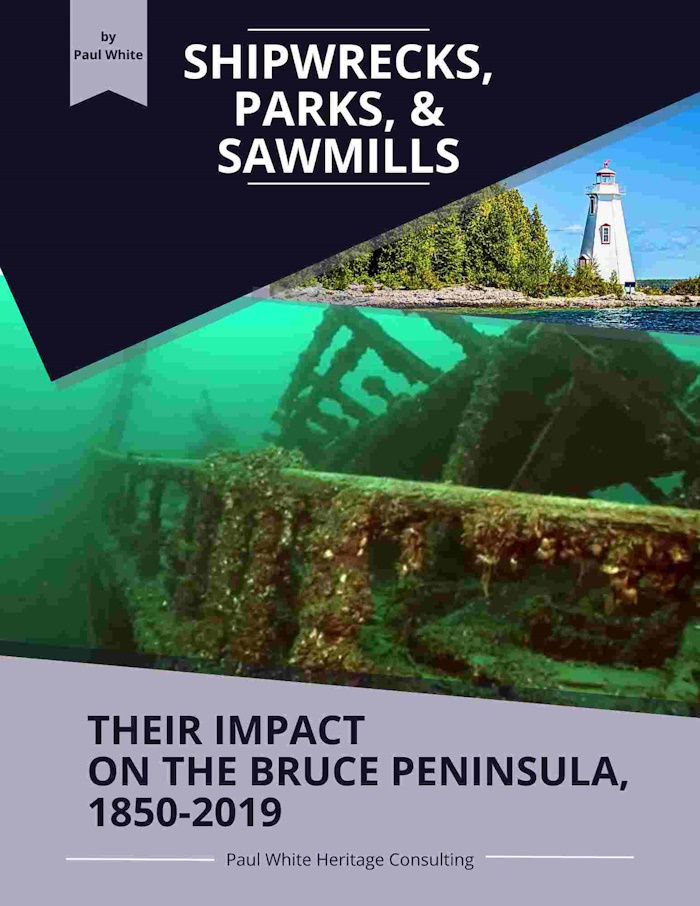
Shipwrecks, Parks, & Sawmills
Their Impact on the Bruce Peninsula,
1850-2019
The first history of the Bruce Peninsula from first settlement to 2019. Shipwrecks, Parks & Sawmills examines the profound influence of the forest products and tourism industries on the Bruce Peninsula—Southern Ontario’s last great wilderness region to open for settlement. This book also fills a long-standing gap in the academic history of the peninsula, offering a detailed and accessible study of its development.
FREE SHIPPING
anywhere in CANADA!
$39.00 CDN
GET YOUR COPY
A Region Late to the Stage of Settlement
The Bruce Peninsula was one of the final areas of southern Ontario to attract settlers. Its remote location and rugged terrain meant that both settlement and commercial development arrived much later than in neighbouring regions. As a result, the peninsula has often been overlooked by historians—an omission this book helps correct.
Conflict Between Settlers and the Forest Industry
When settlers and the forest products industry arrived in the late 1850s, both sought to establish themselves in a region that offered opportunity but also hardship.
Settlers quickly discovered that arable land was limited, pushing many to leave the peninsula in search of more promising farmland to the west.
The forest products industry, once a dominant force, eventually declined until it became little more than a small-scale supplier of firewood to local residents and campers.
The struggles between these two groups shaped the region’s early identity and future direction.
Shipwrecks, Parks, & Sawmills,
PURCHASE your copy!
$39.00 CDN
BUY NOW
Tourism’s Slow but Steady Rise
Tourism did not flourish on the Bruce Peninsula overnight. Its development was gradual and, at times, uncertain.
Several factors contributed to this slow beginning:
Its remote position and limited access
A lack of early investment
Minimal infrastructure to support visitors
Over time, however, the pieces began to fall into place. Government support, conservation movements, and the public’s growing desire for recreational spaces helped transform the peninsula. Its distinctive natural beauty, maritime history, and cultural heritage eventually turned it into one of Ontario’s most valued tourism destinations.
A New Economic Driver Emerges
Today, tourism sustains the Bruce Peninsula—something made possible by over a century of effort, preservation, and development. Shipwrecks, Parks & Sawmills traces this transformation, showing how the region shifted from isolated frontier to thriving travel destination.
NOTE: For sales outside Canada, please contact us for shipping rates.
Why This Book Belongs On Your Shelf
A comprehensive, readable history of a unique Ontario region!
A story of conflict, resilience, and adaptation!
An essential resource for historians, travellers, researchers, and anyone who loves the Bruce Peninsula!
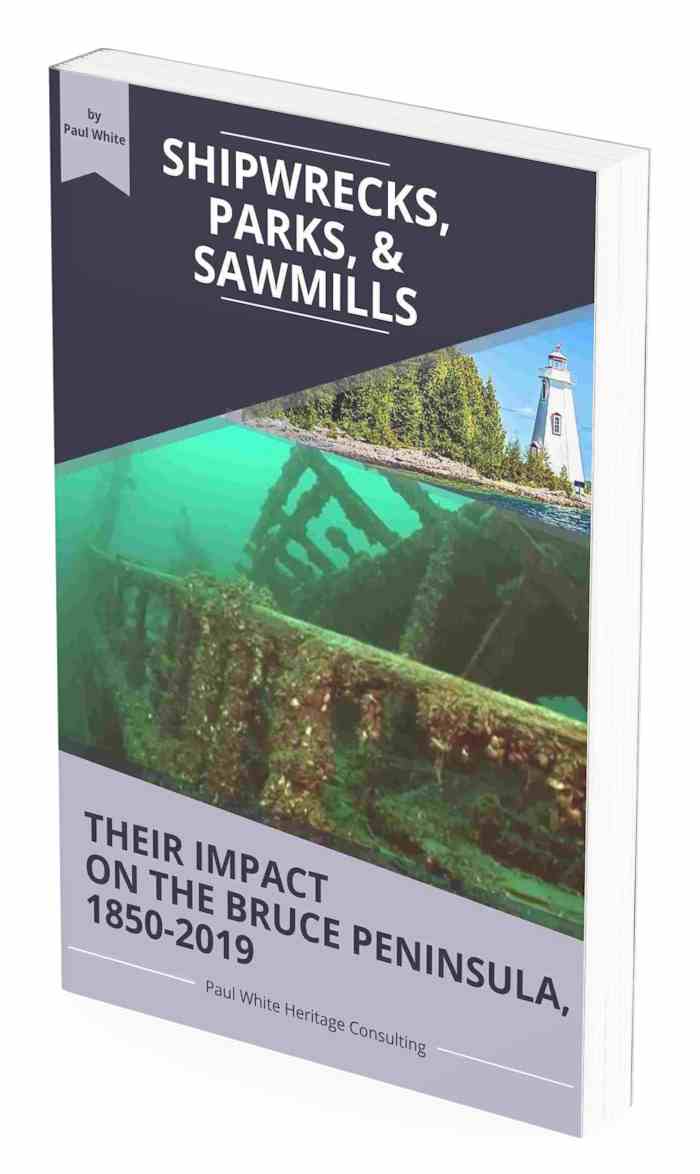
The First History Written About The Bruce Peninsula
Details:
- 123 pages
- book size: 8 1/2" x 11"
- Detailed Appendix describing impact of tourism and some of the legal issues surrounding the forest products industry on the peninsula in the 1800s
- This book is derived from my MA thesis completed at the University of Western Ontarion in 2020.
Test Your Knowledge of the Beautiful Bruce Peninsula!
- What famous Canadian artist camped on the Bruce Peninsula in the 1840s?
- What was the first provincial park opened on the Bruce Peninsula and when did it open?
- Where are you if you are visiting the Ouendiagui?
- Where was the Rankin Portage?
THERE IS MUCH TO ENJOY & LEARN!
I hope you enjoy it as much as I did writing it.
Shipwrecks, Parks, and Sawmills
DON'T FORGET YOUR COPY!
Buy Shipwrecks, Parks, & Sawmills Here
Thank You!
Paul White